Thorens TD 160 MkII, a spending headache.
Posted by Marcellusconi in Rate and Review Your Hi-Fi Gear
[User Manual](https://https://www.vinylengine.com/ve_downloads/download.php?thorens/thorens_td160_mkii_super_en_de_fr.pdf)
Personal Rating ⭐⭐⭐
Italian Version. English Version Below
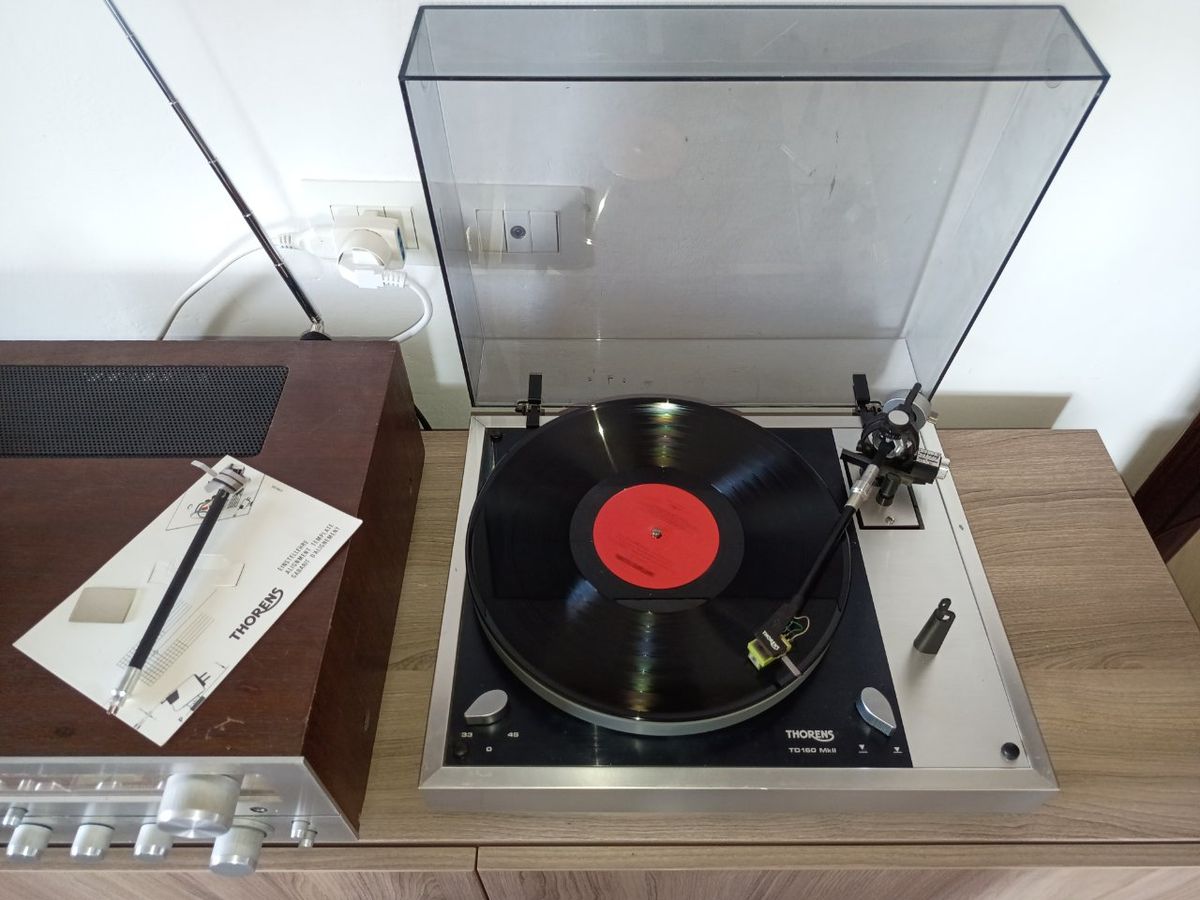
Oramai sono quasi 10 anni che possiedo questa meraviglia. Il TD 160 MKII è l'ultimo entrato nella mia batteria hi-fi sostituendo il mio Garrard Zero 100 e non mi sono mai pentito di questa decisione perché, una volta superate le difficoltà iniziali, si rivela un giradischi eccezionale.
Prodotto ininterrottamente per quasi trent'anni dal 1960 in poi, si piazzava nel mercato come Entry Level e sinceramente, guardando gli Entry Level moderni, stento quasi a crederci. Piatto fluttuante senza tanti fronzoli, nessun automatismo, VTA regolabile e un settaggio dell'anti-skating e della Tracking Force a prova del peggiore e più maldestro Newbie, ma allora perché un giudizio di 3 stelle su 5?
Andando direttamente al sodo, l'allineamento della testina senza i protractor in plastica in dotazione all'epoca è un maledettissimo mal di testa unito a depressione e fastidio.Il braccio di ben 12 grammi (che non è una cosa brutta) è stato studiato da uno psicopatico i cui genitori sono morti prematuramente e male a causa delle maledizioni pronunciate dagli utenti vittime della follia del figlio che ha disegnato qualcosa degno di Saw l'Enigmista.
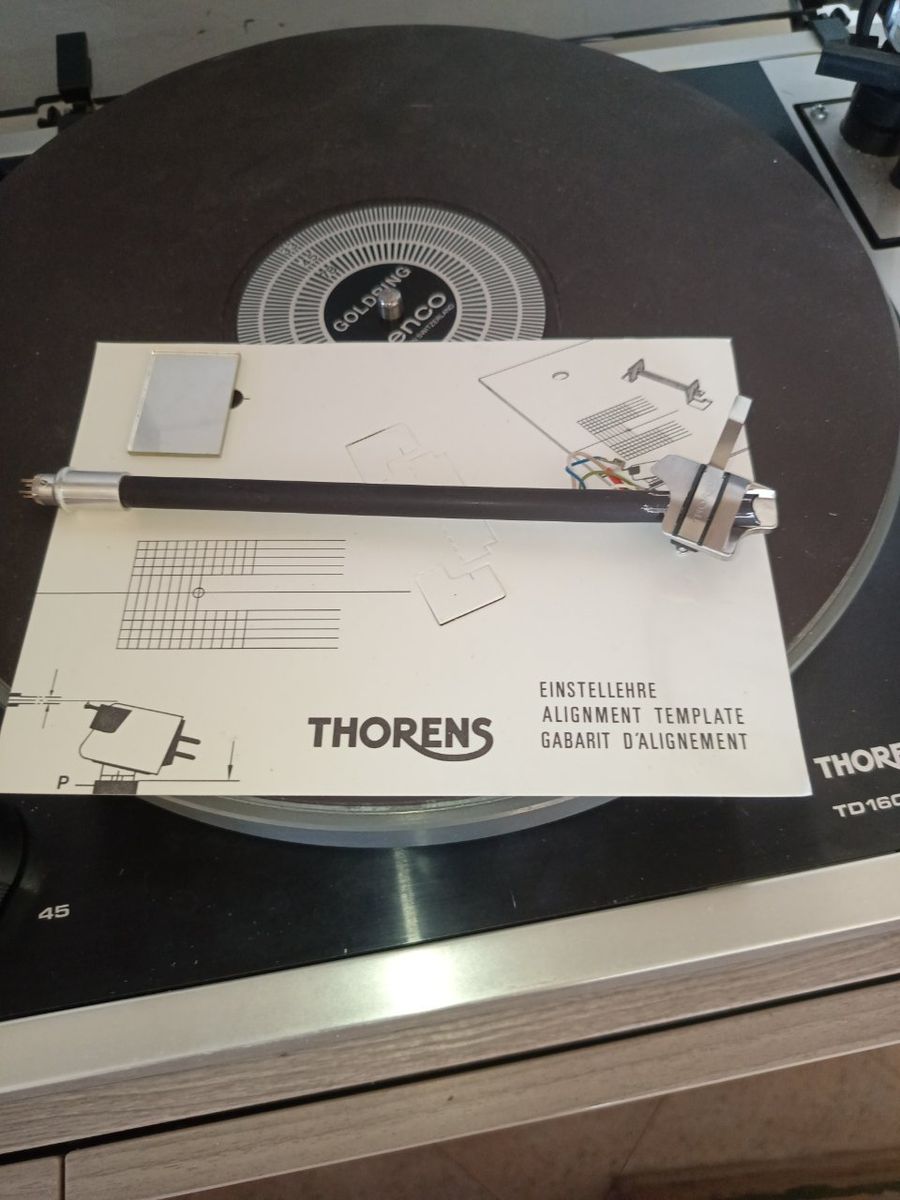
Quella che vedete in foto è la canna TP62 in dotazione con il protractor cartaceo per il TD160. Montare la cartridge in questa canna è un'impresa di una scomodità che fa passare tutti gli altri svantaggi quasi inosservati e presenta un difetto geometrico importante. A causa della sua forma, se equipaggiato con alcune cartridges, il VTA doveva essere regolato così in alto da non permettere la chiusura della cappa che andava a sbattere sullo snodo del braccio. A causa di questo, acquistare la canna TP63, visibile nella foto successiva, era assolutamente necessario.
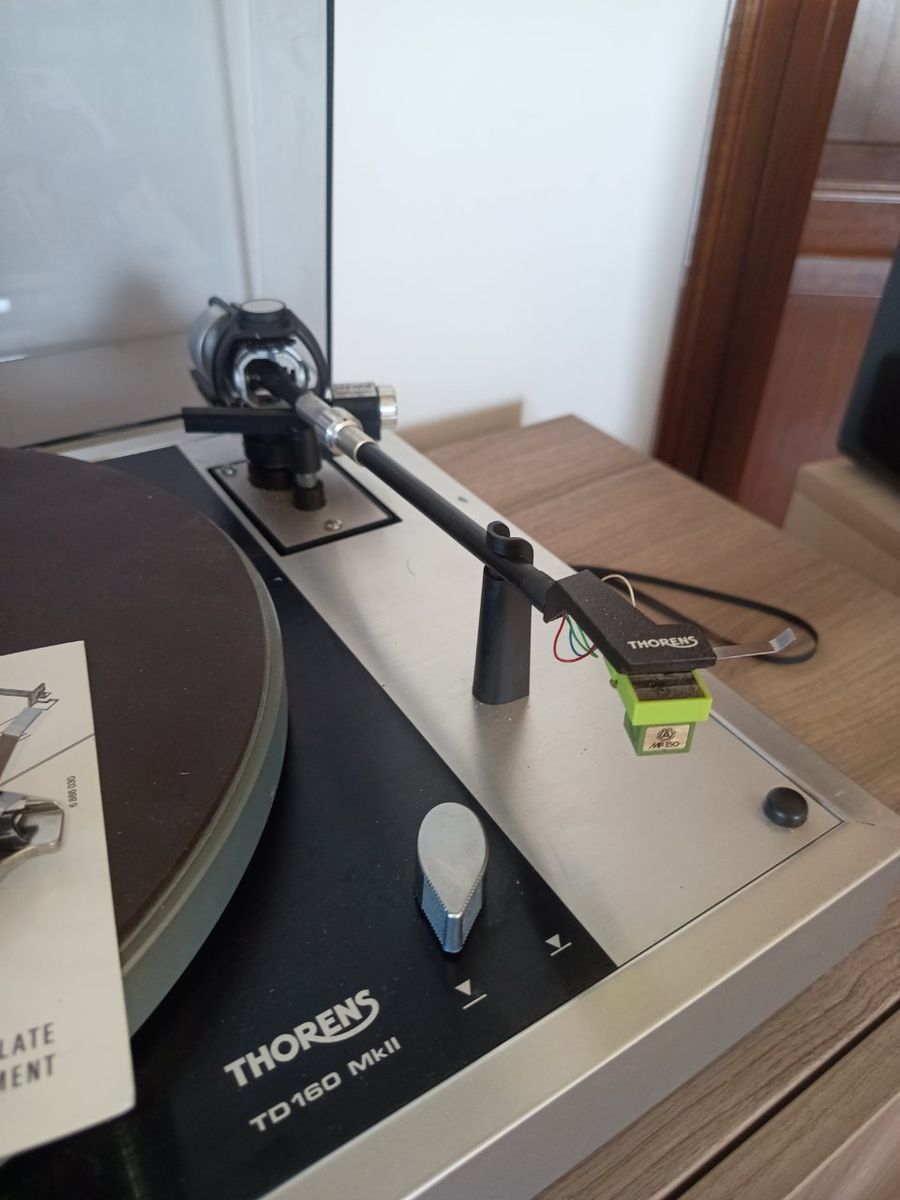
Una volta superato questo problema, se ne aggiunge immediatamente un altro, quindi la regolazione delle sospensioni. Con il tempo queste possono perdere la loro originaria regolazione e necessitare di essere ritarate perché il piatto sia in piano in fase di riproduzione.
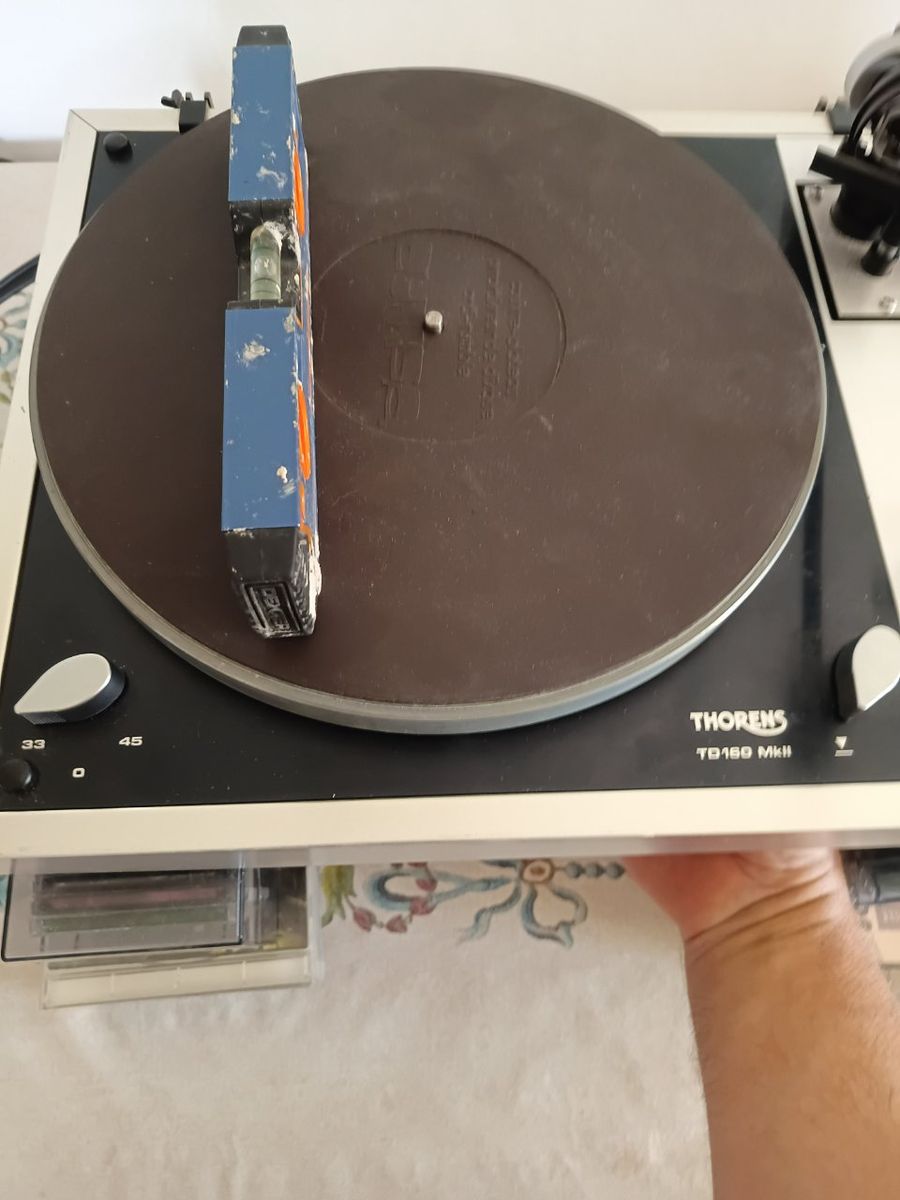
Per regolarle basta avere una bolla da muratore e togliere la base del giradischi e posarlo su un piano con abbastanza spazio sotto da poter passare con una mano. Con piatto, cinghia, braccio e testina montati, si può agire direttamente sui bulloni che regolano le sospensioni, condizione necessaria per evitare wow e flutter.
Non essendoci regolazioni per tarare la velocità del giradischi, se questa risultasse irregolare, allora cambierei la cinghia e, se insiste, allora ci sono da cambiare un paio di condensatori, niente di più o di meno.
Dopodiché il giradischi risulta una passeggiata di salute. I settaggi del braccio sono intuitivi e precisi, anche se non posso dire lo stesso della traduzione del manuale che spesso risulta imprecisa in inglese, ma grazie a Dio c'è Google e risolvere l'arcano non sarà un problema.
Una cosa interessantissima è la regolazione antiskating per il wetplaying e il wetcleaning, pratiche una volta molto in uso ed oggi quasi dimenticate, su cui pensavo di scrivere un post sul blog presto.Ma tirando le somme, è da acquistare? Si può suggerire ad un neofita?Secondo me il TD160 MKII potrebbe essere una palestra per un neofita e allo stesso tempo una scelta a vita se disposti ad affrontare la regolazione della testina, vero cancro del giradischi, e ci si sente pronti ad affrontare un piatto completamente manuale che, per età, potrebbe richiedere interventi di saldatura nella sostituzione di condensatori esauriti, la calibrazione di molle stanche e, se non è stata fatta, una piccola modifica per portare la terra su un cavo a sé stante e non più sul negativo del canale destro.
Una finezza per audiofili? Lo sgancio rapido della cappa è fenomenale e merita una menzione, perché solo l'audiofilo sa la differenza tra una lettura con la cappa e senza. Questa può essere rimossa e reinserita con una facilità disarmante, segno che il risultato audio era al centro di tutto il progetto. Infatti questo giradischi ha una capacità di riproduzione notevole grazie al piatto pesantissimo e al telaio flottante.
Per me è un sì!
Secondo voi?
EN Version:
I have owned this marvel for almost 10 years now. The TD 160 MKII was the latest addition to my hi-fi setup, replacing my Garrard Zero 100, and I have never regretted this decision. Once you get past the initial difficulties, it proves to be an exceptional turntable.
Produced continuously for nearly thirty years from 1960 onwards, it was positioned in the market as an entry-level model. Honestly, looking at modern entry-level turntables, I can hardly believe it. Piatto fluttuante with no frills, no automation, adjustable VTA, and an anti-skating and tracking force setup that is foolproof even for the most clumsy newbie. But then, why a 3 out of 5 stars rating?
Getting straight to the point, aligning the cartridge without the original plastic protractors provided at the time is an absolute headache, combined with frustration and annoyance. The arm, weighing a solid 12 grams (which isn't a bad thing), was designed by a psychopath whose parents must have died prematurely and miserably due to the curses uttered by users. These users fell victim to the madness of the son who designed something worthy of Jigsaw from Saw
What you see in the photo is the TP62 arm wand supplied with the paper protractor for the TD160. Mounting the cartridge in this wand is an incredibly awkward task that makes all other disadvantages pale in comparison, and it features a major geometric flaw. Due to its shape, when equipped with certain cartridges, the VTA had to be adjusted so high that it prevented the dust cover from closing, as it would hit the arm joint. Because of this, purchasing the TP63 arm wand, visible in the next photo, was absolutely necessary.
Once you overcome this problem, another one immediately takes its place: adjusting the suspension. Over time, these can lose their original calibration and need to be readjusted to ensure the platter stays level during playback. To adjust them, all you need is a spirit level, then remove the turntable's base plate and place it on a surface with enough clearance underneath to fit your hand. With the platter, belt, arm, and cartridge mounted, you can adjust the suspension bolts directly—a necessary step to prevent wow and flutter.
Since there are no built-in controls to fine-tune the turntable speed, if it runs unevenly, I would change the belt first. If the problem persists, then you need to replace a couple of capacitors—nothing more, nothing less.
After that, using the turntable is an absolute breeze. The arm settings are intuitive and precise, though I cannot say the same for the manual translation, which is often inaccurate in English. Thankfully, Google exists, and solving the mystery won't be an issue.
One very interesting feature is the anti-skating adjustment for wet playing and wet cleaning—practices that were once common but are now almost forgotten, which I plan to write a blog post about soon.
But cutting to the chase, is it worth buying? Can it be recommended to a beginner?
In my opinion, the TD160 MKII could serve as a great training ground for a beginner while simultaneously being a lifelong choice, provided you are willing to tackle the cartridge alignment, which is the true curse of this turntable. You also need to feel ready for a fully manual platter that, due to its age, might require soldering to replace worn-out capacitors, recalibrating tired springs, and, if it hasn't been done already, a small modification to separate the ground wire instead of leaving it tied to the negative of the right channel.
An audiophile-grade touch? The quick-release dust cover is phenomenal and deserves a mention, because only an audiophile truly understands the difference in sound quality between playing a record with the cover on versus off. It can be removed and reattached with effortless ease, proving that audio performance was at the very heart of the entire design. In fact, this turntable delivers remarkable playback performance thanks to its incredibly heavy platter and floating chassis.
For me, it’s a yes!
What do you think?