The Weight of Sound: How a 1960s Garrard SPG3 Gauge Reminds Us What Vinyl Is Really About
A journey from 50g shellac tracking forces to sub-2g precision. Discover the history of the vintage Garrard SPG3 stylus gauge, the physics of microgrooves, and why true vinyl passion goes far beyond social media trends.

Community article by
@MarcellusconiEnglish Version (scroll down for the Italian version)
> Disclaimer: This article was translated from Italian into English using AI. So, to the AI police out there: don't break my balls.
Collecting records and having a passion for vintage gear and antiques often lead to buying everyday objects stripped of modern conveniences—housed in dated, elegant boxes, a little yellowed and dusty.
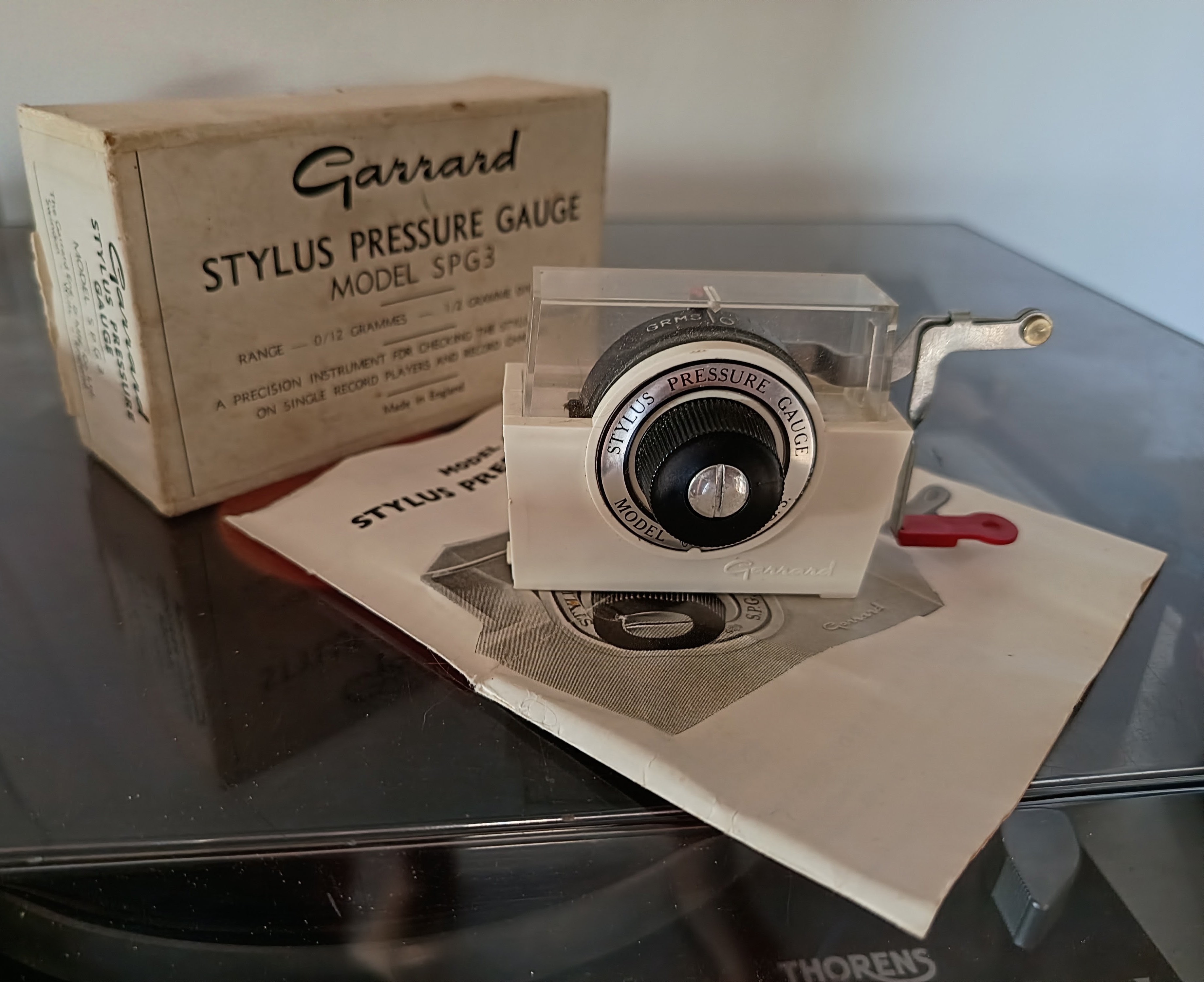
That’s exactly how the box of my Garrard Stylus Pressure Gauge Model SPG3 looks.
But let’s talk a bit about the legendary Garrard, still on the market today with its iconic 301 turntable.
This Swindon-based company represented Hi-Fi with its head held high starting from the 1930s. At the same time, it offered affordable and durable turntables like the SP 25 series, which, up to its Mark V version, was built into all-in-one solutions or systems dedicated to those who didn't care about absolute Hi-Fi performance, but wanted something budget-friendly and great-sounding. Even today, it’s not rare for an SP 25 that’s been sitting for years to come back to life with just a little lube and a check on its contacts and solder joints.
Garrard was also capable of mad innovations, like the Garrard Zero 100 S—which I had the pleasure and honor of owning and loving. However, with age, its signature pantograph tonearm requires too much maintenance and patience, so I replaced it with a Thorens TD160 Mk II, which I am madly in love with (and touch it if you dare).
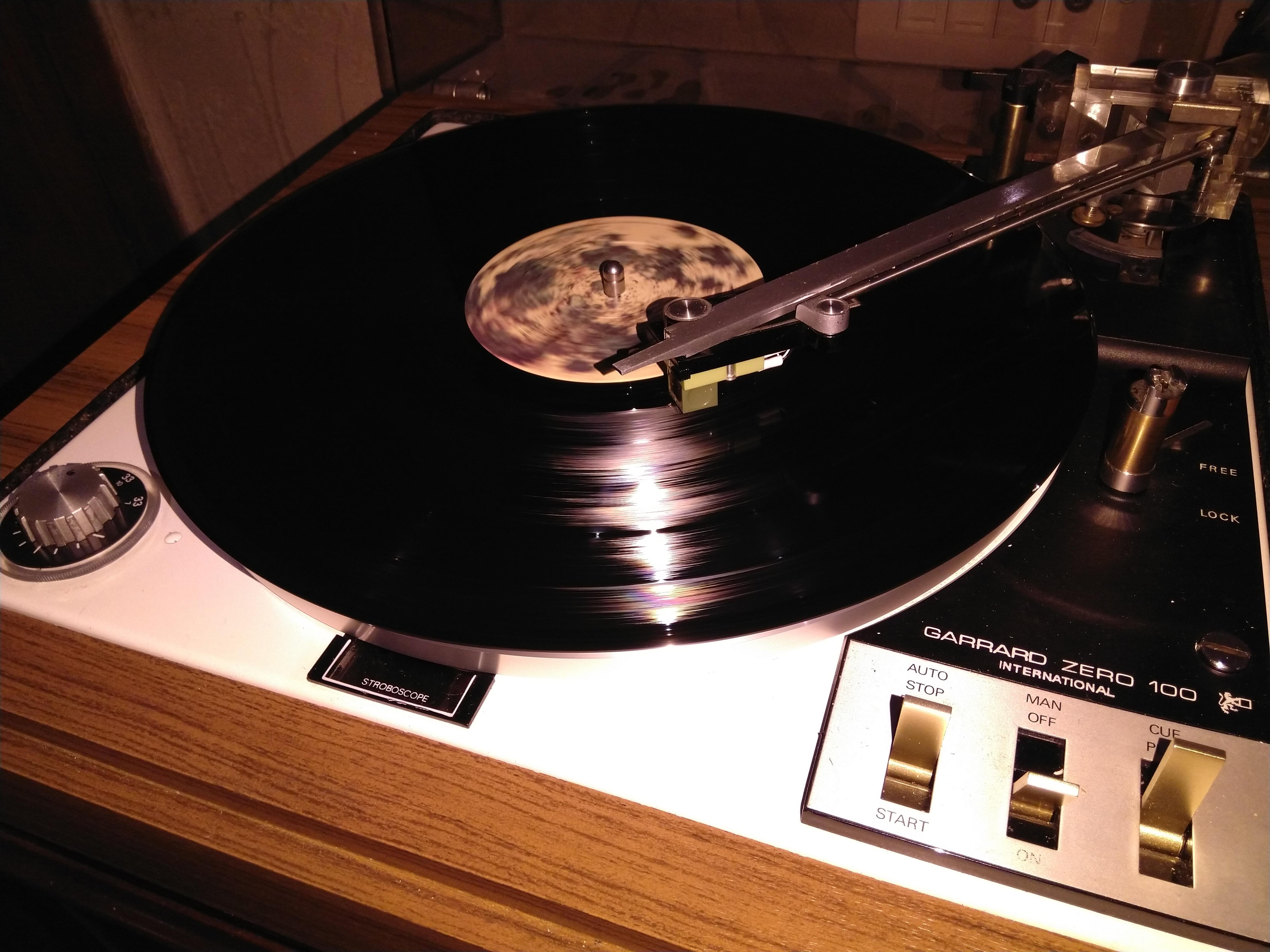
Ma let's get back to the little 1960 spring gauge I bought on eBay while looking for a dedicated scale for my Garrard Zero 100 S. The moment I saw it, I fell in love and bought it. Even though it was designed for turntables of its era, it’s inadequate for modern needs that require quarter-gram precision: the SPG3 reads in half-gram increments across a scale from 0.5g to 12g. Yes, you read that right, 12 grams. In fact, Hi-Fi turntables of that era, also built to play 78s—like the Goldring Lenco GL70 with its medium-high mass tonearm—could track at weights up to a staggering 15g.
The packaging fits the 1960s aesthetic to perfection: mimeographed-style text printed on an adhesive paper strip that sealed the box when new, simple and explanatory text with Garrard’s historic logo on the back, the full brand name, product title, and manufacturing address on the sides, and a snippet of copy on the front mentioning a now-extinct icon of the Hi-Fi scene: "Record Chargers."
With its blatantly '60s look, it’s astonishing how well-preserved this unit is. Yet, judging by photos of other units online, plenty of used examples look like they came off the factory floor yesterday. After all, once you set your pressure gauge, it's not like you tweak it every single day. So, if you feel like picking one up, I don't blame you, but make sure it includes the 5-gram weight stored inside the gauge's dedicated compartment, which is necessary for calibration.
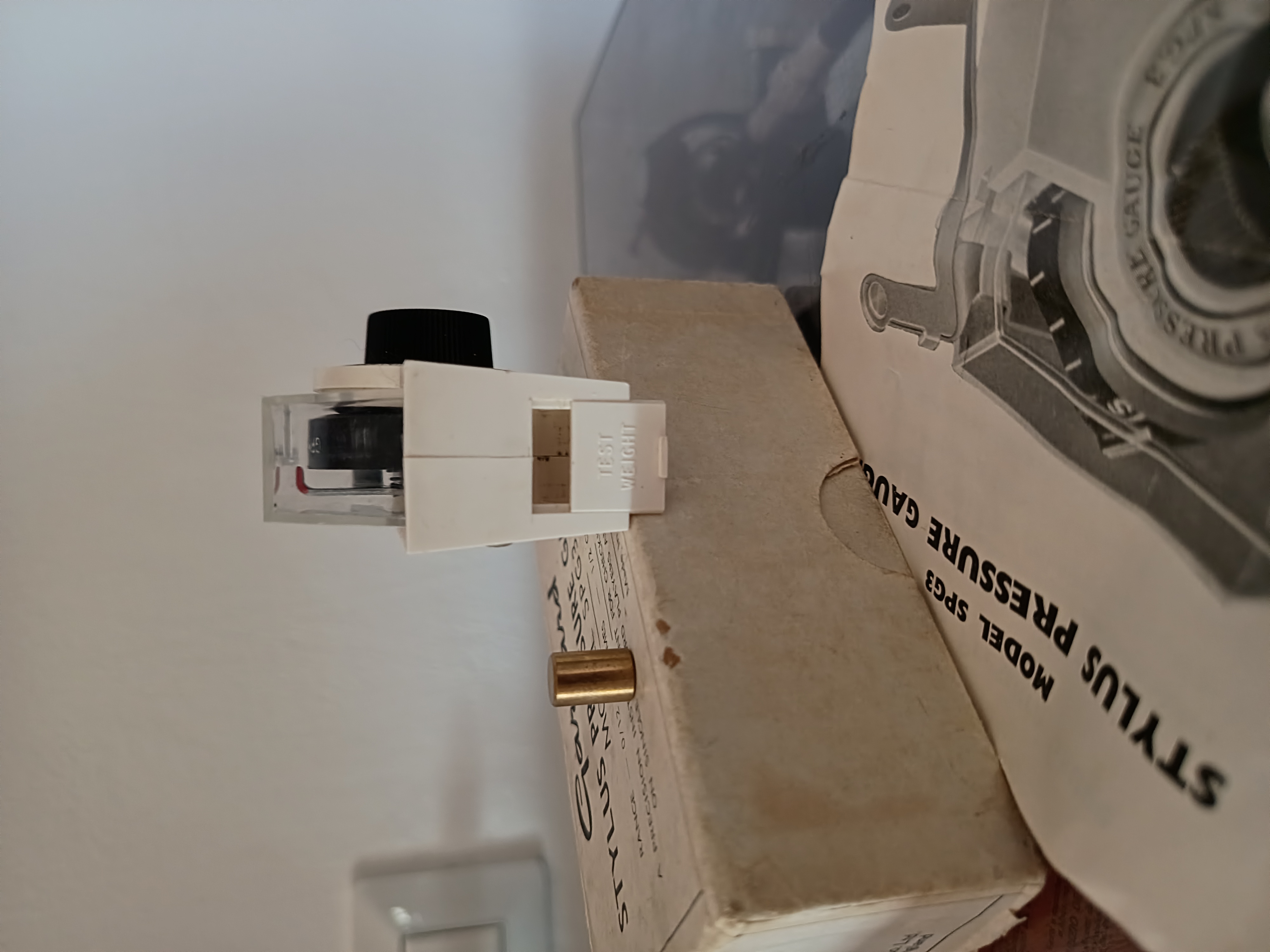
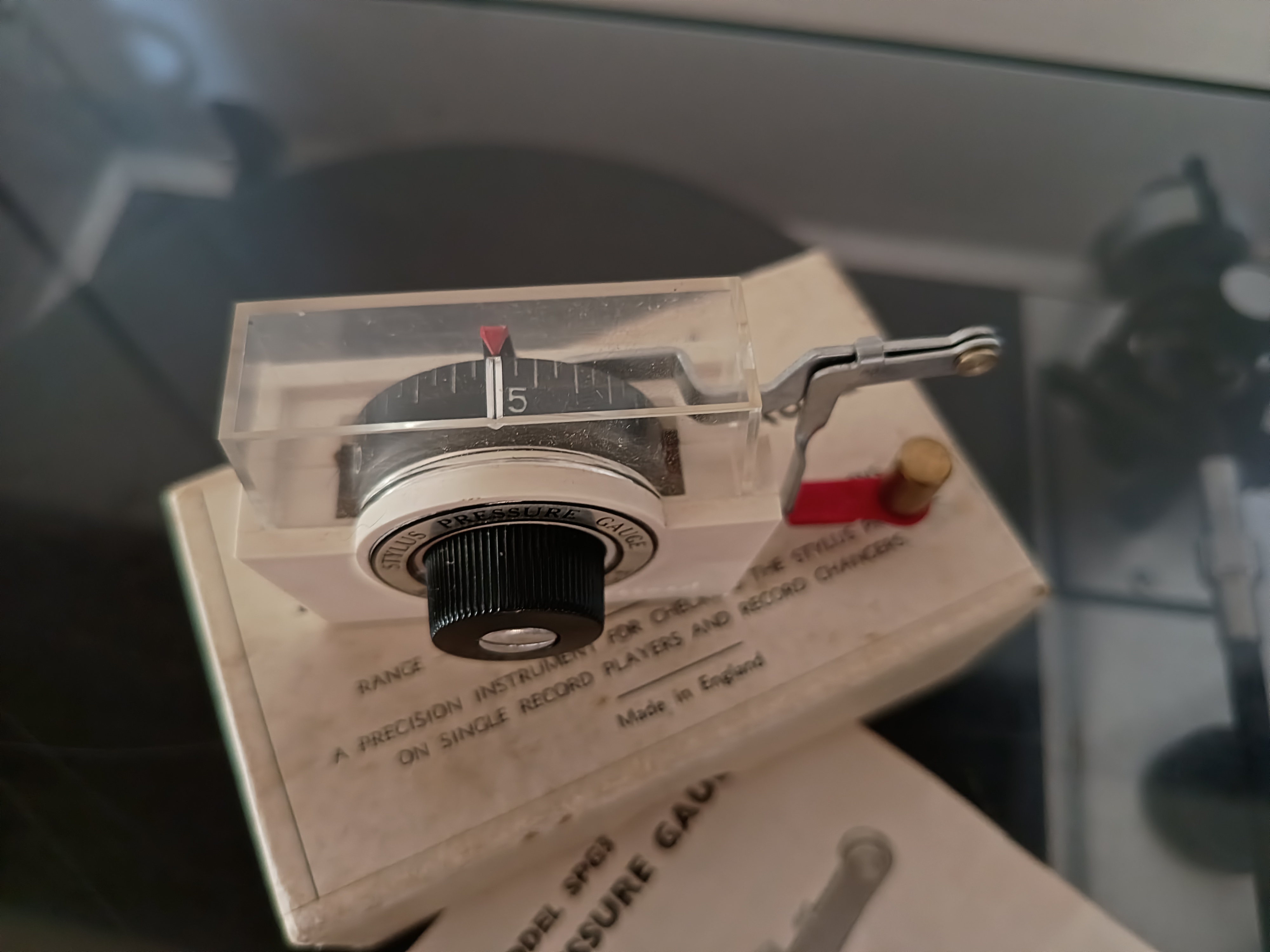
Using it is dead simple and intuitive: you rest the stylus onto the dedicated red-colored pad on the gauge's small arm, then turn the knob on the graduated scale until the pointer aligns with the upper mark on the gauge. This tells you, with sufficient accuracy, what your tonearm's tracking force is set to at that moment. Nothing more, nothing less.
What’s fascinating, though, isn't just the lines, the age, the graphics, or the mechanics; it’s above all the massive technological leap this scale represents: the evolution that brought us down from tracking weights today unthinkable on a record, to the feather-light touch under two grams we use nowadays.
Knowing this history, I can't help but get pissed off whenever I scroll through social media like Reddit and Instagram and see influencers endlessly pushing all kinds of protective record sleeves while simultaneously advertising DJ cartridges or toy-mechanism turntables with ceramic piezo styluses—all on the very same page. How they sleep at night is beyond me, but let’s try to explain where my rage comes from.
Early shellac records, before the 1940s, were engineered to support the heavy arms of gramophones. They were designed to literally shape the old steel needles prior to playing the groove, thanks to abrasive powders mixed right into the shellac blend. In short, it was like sharpening the needle before playback, which occurred at anywhere between 30 and 50 grams with horizontal-only (mono) tracking, using a generally spherical tip moving exclusively on a single plane.
Then we moved from 78s to 45s and 33s, switching from shellac to PVC and modern microgrooves. Here, the record is actually capable of flexing elastically under the stylus and springing right back to its original shape immediately after, preserving the sound even after countless passes of the needle. Playback evolved from mono to stereo, requiring stylus movement across two axes—vertical and horizontal—with groove dimensions that are roughly one-third of the original early-20th-century 78 RPM records.
Thus, with the shrinking of the groove and its transformation into a sinuous three-dimensional path, tracking force dropped exponentially. This was also thanks to new stylus shapes designed to reach the deepest parts of the groove, picking up every detail while respecting the elastic memory of PVC.
All this to say that tracking force isn't just a spec to follow for accurate playback; it’s vital for the physical health of our vinyl. That’s precisely why gadgets like the little Garrard SPG3 have always been so popular.
So I ask myself: why promote useless plastic condoms for records while steering beginners toward turntables fitted with cheap nails that cost way more than their performance merits? Why not encourage them to buy 10 fewer records a year and put that money toward a noble cartridge and a real turntable? Why not explain that this hobby isn't about opening your wallet and ordering records online, but is actually about discussion, research, patience, and active listening—all the way until you reach true pleasure through sound and the music you love.
Versione Italiana.
Collezionare dischi ed avere la passione per il modernariato e l’antiquariato spesso portano all’acquisto di oggetti d’uso comune ma senza le comodità moderne, con scatole dalle grafiche datate ed eleganti, un poco ingiallite e sporche.
Così appare la scatola della mia bilancia Garrard Stylus Pressure Gauge Model SPG3.
Ma parliamo un minimo della mitica Garrard, oggi ancora sul mercato con il grandioso giradischi 301.
Questa casa di Swindon ha rappresentato a testa alta l’hi-fi fin dagli anni ‘30 e nello stesso tempo offerto giradischi economici e durevoli, come la serie SP 25, che nelle sue versioni fino alla Mark V è stato montato in soluzioni all-in-one o sistemi dedicati a chi non interessava una resa hi-fi del proprio stereo ma che cercava qualcosa di economico e comunque ben suonante ed oggi non è raro che un SP 25 fermo da anni torni in vita con una lubrificata e un controllo ai contatti e saldature.
La Garrard è stata anche capace di innovazioni folli, come il Garrard Zero 100 S, che ho avuto il piacere ed onore di avere e amare, ma con l’età il braccio a pantografo che lo caratterizza richiede troppa manutenzione e pazienza, così lo sostituii con un Thorens TD160 Mk II di cui sono innamoratissimo e guai a chi me lo tocca.
Ma torniamo alla piccola bilancia a molla del 1960 che comprai su eBay mentre cercavo una bilancia dedicata proprio per il mio Garrard Zero 100 S. Appena la vidi me ne innamorai e la comprai anche se, proprio perché dedicata ai giradischi dell’epoca, è inadeguata alle necessità moderne che richiedono i quarti di grammo mentre la SPG3 dà il mezzo grammo con una scala da 0,5 g a 12 g. Sì, avete letto bene, 12 grammi, tant'è che i giradischi hi-fi dell’epoca, pensati anche per la lettura dei 78 rpm, come il Goldring Lenco GL70 con il suo braccio di massa medio-alta, potevano tracciare a pesi fino a ben 15 g.
La confezione calza perfettamente lo stile degli anni ‘60, con le scritte ciclostilate su una carta adesiva che sigillava la scatola da nuova, testi semplici ed esplicativi con il logo storico della Garrard stampato sul retro, nome completo della Garrard, nome del prodotto e indirizzo di produzione sui lati e un filo di testo esplicativo sul fronte dove viene menzionata anche un'icona estinta della scena Hi-Fi, i “Record Chargers”.
Dall’aspetto clamorosamente anni ‘60, stupisce come questo esemplare sia rimasto in così buone condizioni, ma, giudicando le foto di altri esemplari online su noti siti di vendita, non sono pochi gli esemplari usati che sembrano usciti ieri dalla fabbrica; d'altronde, una volta regolato il pressure gauge non è che lo si ritocchi ogni giorno. Così, nel caso vi venga la voglia di acquistarne una, non vi biasimo, ma assicuratevi che sia presente il peso da 5 grammi, conservato in uno sportello dedicato della bilancia, necessario per la sua calibrazione.
L’utilizzo è fin troppo facile e intuitivo: si posa la puntina sulla base dedicata e colorata di rosso del braccetto della bilancia e si ruota la manopola della scala graduata fino a quando la lancetta non è centrata con il segno superiore impresso sulla bilancia, indicando, con sufficiente precisione, a quanto è settato il tracking force del braccio al momento. Niente di più e niente di meno.
La cosa affascinante, però, non è solo nelle linee e nel tempo, nelle grafiche e nella meccanica, ma è soprattutto il salto tecnologico che questa bilancia rappresenta: il passaggio che ha portato a scendere da pesi oggi impensabili da applicare su un disco al leggero tocco sotto i due grammi usato oggi.
Conoscendo questa storia, non posso ogni volta non arrabbiarmi quando sui social come Reddit e Instagram vedo influencer che insistono nel vendere ogni tipo di sleeve per proteggere i dischi e allo stesso tempo pubblicizzano cartridge da DJ o giradischi con meccanismi giocattolo e puntine piezoelettriche, tutto nella stessa pagina. Come fanno a dormire la notte non lo so, ma cerchiamo di spiegare il perché di questa mia ira.
I primi dischi in shellac, prima degli anni ‘40, erano pensati in maniera tale da supportare i pesanti bracci dei grammofoni e capaci di modellare le vecchie puntine in acciaio prima della lettura del solco attraverso polveri abrasive contenute nella miscela della gommalacca che componeva il disco. Insomma, come un'arrotata alla puntina prima della lettura, che avveniva tra i 30 e i 50 grammi e con lettura orizzontale, quindi mono, e con una puntina, generalmente sferica, che si spostava unicamente su un piano.
Poi dai 78 giri siamo passati ai 45 e 33 giri, e dalla gommalacca si è passati al PVC e ai moderni microgroove, dove il disco è addirittura in grado di deformarsi al passaggio della puntina per tornare poi alla posizione originale subito dopo la lettura, in maniera tale da preservare il suo suono anche dopo molteplici passaggi della needle. La lettura da monofonica è passata a stereofonica, necessitando di movimenti della puntina su due assi, verticale e orizzontale, e con dimensioni che sono circa un terzo di quelle originali dei 78 giri dei primi del secolo scorso.
Così, con la riduzione del solco e la sua trasformazione che lo vede muoversi sinuoso su tre dimensioni anche la tracking force si è ridotta esponenzialmente grazie anche alle nuove geometrie delle puntine ideate per raggiungere le parti inferiori del solco e capaci di leggere ogni dettaglio rispettando la capacità elastica del PVC.
Tutto questo per dire che la tracking force non è solo un dato da rispettare per una corretta riproduzione ma anche per la salute dei nostri dischi ed è per questo che gadget come la piccola Garrard SPG3 sono sempre stati popolari.
Quindi mi chiedo perché promuovere allo stesso tempo inutili goldoni per dischi e indicare giradischi equipaggiati con puntine che sono chiodi dal prezzo incongruo con le prestazioni agli utenti neofiti invece di spingere a comprare magari 10 dischi in meno in un anno a favore di una cartuccia nobile, in favore di un vero giradischi, spiegando e raccontando come questo hobby non sia semplicemente aprire il portafoglio e ordinare dischi via posta, ma che è in realtà confronto, informazione, pazienza ed ascolto, fino al raggiungimento del piacere attraverso il suono e la musica amata.